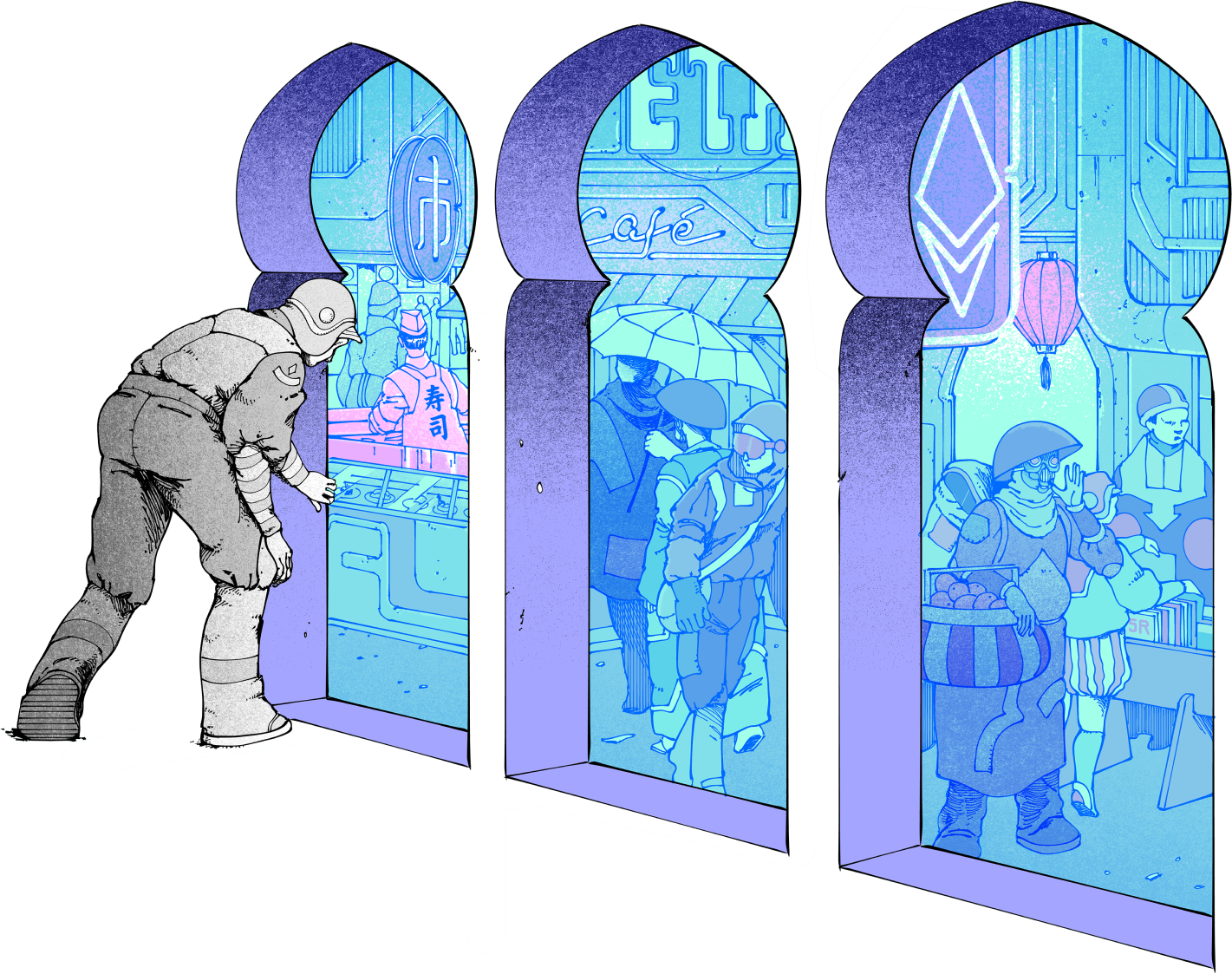
Who decides what you can do with your money?
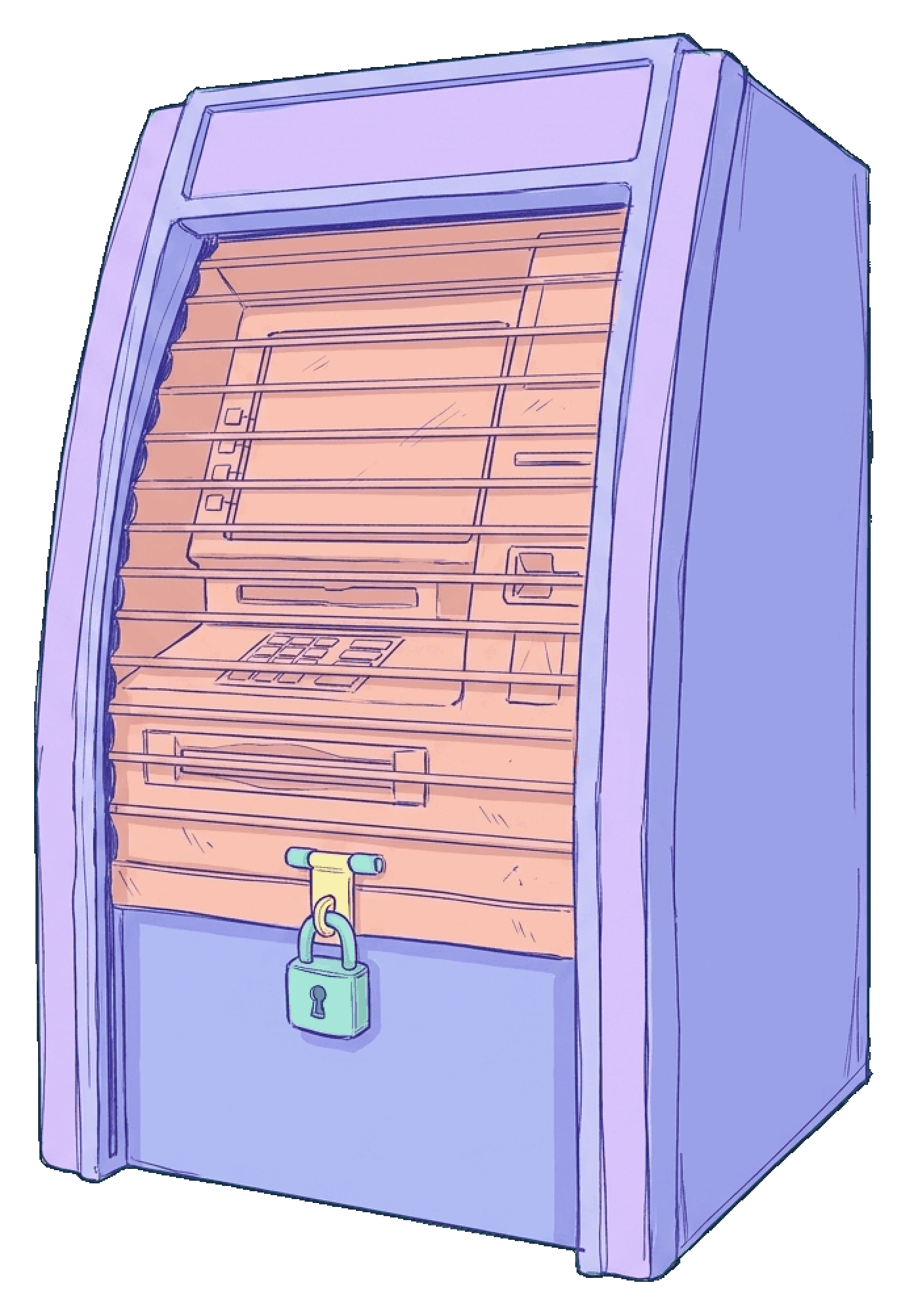
You wake up and see a strange notification. Your account has been frozen. Your money is still there, but you cannot spend it, transfer it, or pay your bills.
Most of us rarely think about who controls our digital access until something goes wrong.
Usually it is temporary. A fraud check clears, the payment goes through, and you forget about it. But for a few seconds you bumped into something that is true every day and almost never visible: between you and your money sits a company, and it can say no.
Sometimes even your own government can block you:
- Lebanon, 2019: People with US dollar savings could no longer withdraw them normally.[1]
- Argentina, 2019 to 2025: People faced tight limits on buying US dollars and moving money abroad.[2]
- Myanmar, 2021: Cash shortages and withdrawal limits made bank balances difficult to access.[3]
- Sri Lanka, 2022: Authorities restricted how foreign currency could be held, used and withdrawn.[4]
And many people never get access in the first place. According to the latest World Bank Global Findex, 1.3 billion adults worldwide still do not have a financial account, even though 900 million of them have a mobile phone.[5]
Having money and being free to use it are not the same thing.
This is what censorship can look like when it involves money. Not a post disappearing from a website, but someone else having the final say over whether you can pay, withdraw, receive or participate.
What financial freedoms does Ethereum offer?
Financial freedom is not only about how much money you have. It is also about how much say you have over what you can do with it.
You can think of this as financial agency: the ability to hold, move and use your assets, choose which financial tools to use, and take your money elsewhere when a service no longer works for you.
Ethereum cannot guarantee wealth or equal outcomes. What it can do is reduce how often you need someone else's permission to participate.
Ethereum offers the ability to hold and transfer ETH without depending on a company to keep your account open.
Your ability to participate economically
On Ethereum, you can use assets as collateral, access the same underlying financial infrastructure from different countries, interact with markets around the clock, and move assets between applications without opening a new account each time.
This can matter when services leave a country, or when access to traditional financial infrastructure is limited.
What is censorship resistance?
Censorship resistance is a system's ability to remain usable even when someone tries to block a user or transaction.
On Ethereum, no single company, validator or app operator controls access to the main network. An app can set its own rules and block certain actions inside that app, but those rules end where the app ends. They do not decide what you can do on Ethereum as a whole.
This is the technical property behind Ethereum's open access.
An alternative when institutions fail
Most people will continue using banks, websites and other intermediaries because they are convenient and useful.
Censorship resistant infrastructure provides another option when those systems become unavailable, unreliable or hostile.
You may rarely need that option, but its value becomes clearer on the day you do.
Emergency situations
When Russia invaded Ukraine in 2022, Ukraine's central bank introduced emergency limits on cash withdrawals and some financial transfers to protect the banking system. At the same time, the government published official crypto addresses, including an Ethereum address, so people around the world could send funds directly.
Within the first month, Ukraine's official crypto fund had received more than $60 million in cryptoassets.[6]
Crypto did not replace Ukraine's banks. It provided another way to move value when speed, borders and access mattered.
That is the value of censorship resistant infrastructure: another path when the systems you normally rely on become restricted, unavailable or unreliable.
Your ability to publish
Information stored through decentralized systems can be much harder for one organization to quietly remove or rewrite.
In 2018, a Chinese student published an open letter about a sexual assault case at Peking University. After the letter disappeared from major online platforms, supporters copied it into an Ethereum transaction. The post could be removed from a website, but the copy on Ethereum remained.[7]
Later that year, an investigative article about a vaccine scandal was also removed from Chinese social media. Readers responded by preserving the article on Ethereum, turning the network into a record that was much harder for any one platform to erase.[8]
A similar thing happened in 2020, when an interview with Wuhan doctor Ai Fen disappeared from WeChat. Copies soon appeared in formats designed to survive censorship, including on Ethereum.[9]
A platform can remove a post. It is effectively impossible for one party to erase the underlying record from Ethereum.
Your freedom to build
Developers can deploy programs to Ethereum without asking Ethereum for an API key, developer account or app store approval.
Once deployed, those programs do not depend on one company's continued permission to exist.
In 2021, Uniswap Labs stopped showing some tokens on its website. But the blockchain app itself kept working so other websites could still connect to it and let people access the same tokens.[10]
Even if one website stops providing access, the underlying application can still remain on Ethereum and be reached through another interface.
How Ethereum resists censorship
Ethereum spreads control across many independent participants:
- Anyone can run a node and independently check the network's rules. Ethereum is deliberately designed so a node can run on consumer hardware.
- Validators across the world propose and confirm blocks of transactions.
- Multiple independent teams build the software used to operate the network.
- There is no Ethereum headquarters that can be ordered to switch the network off.
- There is no central Ethereum account system that can suspend a user.
This makes sustained censorship much harder to coordinate because it requires controlling or influencing many independent parts of the system rather than one administrator.
A validator or block builder can leave a transaction out of a block. But another participant can include it in a later block. A transaction can be delayed but never fully stopped.
ETH is not like other crypto assets
Many crypto assets are issued by companies that keep some control over them. For example, issuers of stablecoins such as USDC and USDT can block addresses and freeze tokens when required.[11]
ETH works differently. It is the native asset of Ethereum, not a token issued by a company or controlled by a smart contract. There is no administrator key that can freeze the ETH in a particular account.
If you control your account and can access the Ethereum network, nobody, including any company or government, can revoke your ability to use your ETH.
Getting started on Ethereum
You do not need to become an expert to reduce how much your digital access depends on intermediaries. An easy first step is to install a crypto wallet to create an Ethereum account.
Digital freedom beyond Ethereum
Ethereum is only one part of a much larger effort to keep digital infrastructure open.
Organizations around the world work on internet access, free expression, resilient communication, privacy and access to information.
Electronic Frontier Foundation
Defends digital civil liberties in the courts and in public policy
Access Now
Works to defend digital rights and documents internet shutdowns worldwide.

Internet Archive
Preserves the web and defends the right to read, lend, and archive online
Tor Project
Builds open anonymity and anti-censorship tools
Freedom of the Press Foundation
Develops tools and resources that support journalists and press freedom.

Reporters Without Borders
Works to protect freedom of information and journalists around the world.
A different future is possible
Digital systems do not have to be built around permanent permission from a handful of gatekeepers.
We can build infrastructure where companies still provide useful services, communities still set their own rules, and laws still apply, while no single intermediary holds the final switch over everyone's access.

Further reading
- Lebanon: 2023 Article IV Consultation (opens in a new tab) - International Monetary Fund
- Comunicación "A" 6815 (opens in a new tab) - Banco Central de la República Argentina (limit lifted in April 2025)
- Myanmar Economic Monitor, July 2021 (opens in a new tab) - World Bank
- Amending limits and conditions on possession of foreign currency (opens in a new tab) - Central Bank of Sri Lanka
- Mobile-Phone Technology Powers Saving Surge in Developing Economies (opens in a new tab) - World Bank (Global Findex 2025)
- The Cryptocurrencies Fund of Ukraine has already raised more than $60 million for the needs of the Armed Forces (opens in a new tab) - Cabinet of Ministers of Ukraine, March 2022
- China's #MeToo activists use blockchain to skirt censors (opens in a new tab) - Hong Kong Free Press
- Chinese bet on blockchain to counter vaccine scandal cover-up (opens in a new tab) - TechNode
- Chinese Netizens Use Ethereum To Avoid China's COVID-19 Censorship (opens in a new tab) - Forbes
- Token access on app.uniswap.org (opens in a new tab) - Uniswap Labs
- USDC Risk Factors (opens in a new tab) - Circle
- Holidays and trading hours (opens in a new tab) - New York Stock Exchange
- New "T+1" settlement cycle: what investors need to know (opens in a new tab) - US Securities and Exchange Commission
- Ethereum Uptime (opens in a new tab) - ethereumuptime.com