
Powered by Ethereum
Ethereum is no longer just a single network. With hundreds of blockchains now built on top of it, Ethereum has become more cost-effective, faster, and accessible for everyday use.
Embrace the future by joining one of the many networks powered by Ethereum!

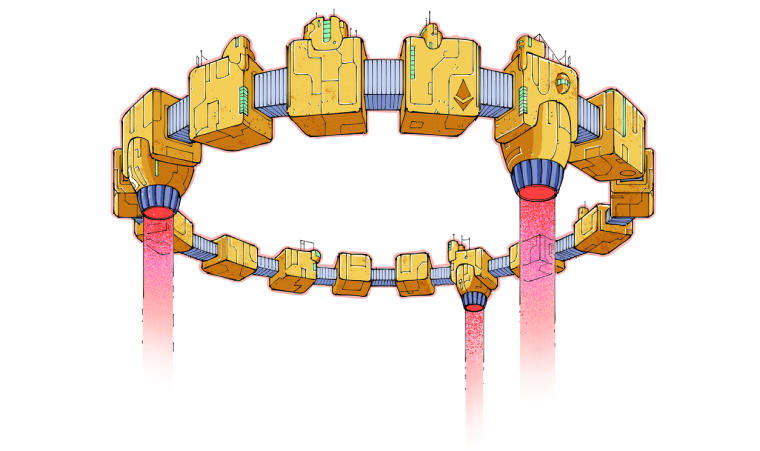
The network of networks
Ethereum's strength and security provides a platform for other networks to build upon. With a single account, everything is compatible and connects seamlessly.


Ready to start?
Have a look at all the different networks that are available to you.
Explore networks
Arbitrum One
Arbitrum One is a general-purpose Optimistic Rollup built by Offchain Labs and governed by the Arbitrum DAO.

Base
Base is an Optimistic Rollup built with the OP Stack. It offers a low-cost and builder-friendly way for anyone, anywhere, to build onchain.

Starknet
Starknet is a general purpose ZK Rollup based on STARKs and the Cairo VM.

Powered by Ethereum
Why do we need multiple networks on Ethereum?
Why are there all these networks and not just one Ethereum network?
Learn moreFrequently asked questions
There are many different ways one can categorize networks in relation to Ethereum. Many networks claim to be scaling Ethereum to gather popularity. However, one clear perspective is whether the network stores its data on the Ethereum main network. This greatly enhances user security and Ethereum's permissionless vision. Such projects are often called “rollups”. If data is stored somewhere else, then the project is not a direct Ethereum extension and is rather independent. Check out some of the most popular Ethereum networks.
Some specific industries might not require such direct close relationship such as gaming or non-financial applications where different technologies are better fit.
While generally designed with robust security features, their safety depends on the underlying technology, smart contract security, and maturity of the network.
Users should perform due diligence, starting with small transactions and staying updated on developments to ensure secure usage.
Ethereum can't easily scale its own main chain because it needs to stay secure and decentralized. Making the main chain faster would require larger nodes and more specialised hardware, reducing the number of people who can run a node and undermining decentralization. Instead, Ethereum focuses on being the best settlement layer it can be. The Fusaka upgrade (December 2025) introduced PeerDAS, a more efficient way for L2s to post and retrieve data on Ethereum, so the network of networks can keep scaling without compromising on security.
Just as there is no 'official' Ethereum client, there is no 'official' Ethereum layer 2. Ethereum is permissionless - technically anyone can create a layer 2! Multiple teams will implement their version of a layer 2, and the ecosystem as a whole will benefit from a diversity of design approaches that are optimized for different use cases. Much like we have multiple Ethereum clients developed by multiple teams in order to have diversity in the network, this too will be how layer 2s develop in the future.