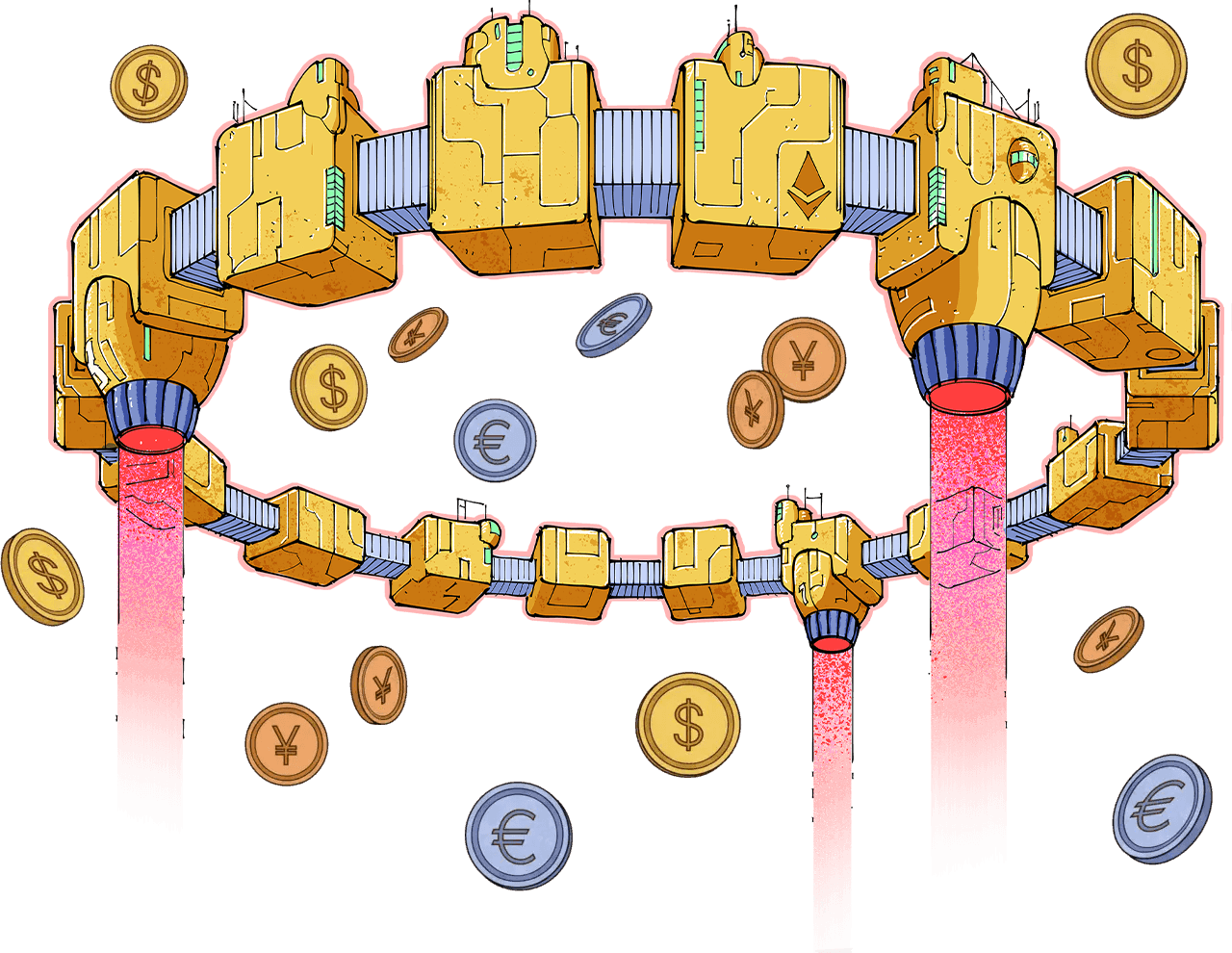
What is a stablecoin?
Stablecoins are cryptocurrencies without the volatility. They offer the same global reach and flexibility as ETH but hold a steady value, so you have access to everyday digital money to use across the Ethereum network.

The infamous Bitcoin pizza
In 2010, someone bought 2 pizzas for 10,000 bitcoin. While worth only $41 at the time, those assets are worth millions today. There are many similar stories of early spending on Ethereum. Because cryptocurrencies can appreciate in value, spending them may carry an opportunity cost. Stablecoins solve this volatility problem, so you can make everyday purchases while holding onto your ETH.
How stablecoins work
Stablecoins use different methods to maintain a steady value. While most are backed by collateral held in reserve, others rely on smart contract algorithms. Select a category to see how common mechanisms work, their benefits, and trade-offs.
Fiat-backed
Example projects
Pros
- Safe against crypto volatility.
- Changes in price are minimal.
Cons
- Centralized – someone must issue the tokens.
- Requires auditing to ensure company has sufficient reserves.
Crypto-backed
Example projects
Pros
- Transparent and fully decentralized.
- Quick to turn into other crypto assets.
- No external custodians – all assets are controlled by Ethereum accounts.
Cons
- Less stable than fiat-backed stablecoins.
- You need to keep an eye on the value of the crypto collateral.
Precious metals
Example projects
Pros
- Safe against crypto volatility.
Cons
- Centralized – someone must issue the tokens.
- You need to trust the token issuer and the precious metal reserves.
Algorithmic
Example projects
Pros
- No collateral needed.
- Controlled by a public algorithm.
Cons
- You need to trust (or be able to read) the algorithm.
- Your balance of coins will change based on total supply.
Getting started
Before you buy or receive stablecoins, you'll need a place to store them. The two most common options are:



Choose a stablecoin
There are hundreds of stablecoins available on Ethereum. Use these prominent options as a starting point to research the best stablecoin for your needs.
Editors' choices
Explore some of the most established stablecoins on Ethereum. These options are widely supported and frequently used to interact with dapps.

USDS
USDS is the successor to Dai, fully backed by crypto and designed for onchain savings and rewards. Widely used in DeFi while keeping users in full control of their funds.

USDC
USDC is the largest US-regulated fiat-backed stablecoin. Its value is pegged to the US dollar, issued by Circle, and is widely used.

GHO
GHO is a decentralized multi-collateral stablecoin created by Aave. It uses a hybrid model that combines crypto-collateralized backing with a community governance approach.

Glo Dollar
Glo Dollar (USDGLO) is a stablecoin that donates all profits to public goods and charities. By holding or using Glo Dollar, you help fund causes like fighting poverty and supporting open-source—at no extra cost to you.
Top stablecoins by market capitalization
Market capitalization is the total number of tokens that exist multiplied by the value per token. This list is dynamic and the projects listed here are not necessarily endorsed by the ethereum.org team.
| Currency | Market Capitalization | Collateral Type |
|---|---|---|
| $182,636,940,369 | Fiat | |
| $71,987,197,071 | Fiat | |
| $10,031,242,285 | Crypto | |
| $4,647,804,543 | Crypto | |
| $4,540,521,319 | Crypto | |
| $3,019,745,423 | Fiat | |
| $2,382,652,982 | Fiat | |
| $1,775,107,024 | Crypto | |
| $697,520,733 | Crypto | |
| $541,002,008 | Fiat |


How to get stablecoins
There are multiple ways to acquire stablecoins. Whether you are swapping existing assets, buying with fiat, or earning them through work, there is a path that fits your current needs.



3 - 7% interest rate with stablecoins
Strong demand to borrow stablecoins can create opportunities to earn above-average interest rates. When you deposit tokens into decentralized lending pools, you provide the capital for other people to borrow, or to power other financial apps and trading strategies.

Apps to earn interest on stablecoins
Put your stablecoins to work by lending them through peer-to-peer lending apps. Interest rates (APY) are determined by market activity and fluctuate based on real-time supply and demand.




Learn more about stablecoins
Dashboard & Education

Stablecoins.wtf
Stablecoins.wtf offers a dashboard with historical market data, statistics, and educational content for the most prominent stablecoins.

Stablepulse
Provides a clear, accurate, and minimally filtered view of the stablecoin ecosystem with analytics across tokens and chains.

Stables.info
Live stablecoin leaderboard and dashboard, tracking supply and onchain data for all major stablecoins and chains.

Dune Stablecoin Metrics
Dashboard delivering real-time insights into stablecoin supply, liquidity, trading volume, and adoption across blockchains.

Visa Onchain Analytics
Dashboard visualizing the movement, supply, and usage of fiat-backed stablecoins across public blockchains.

Stablewars
Analytics leaderboard and dashboard, tracking balances, transfers, and rankings for stablecoins across multiple blockchains.